| Tevir | |||||||
|---|---|---|---|---|---|---|---|
| |||||||
| cantillation | |||||||
| Sof passuk | ׃ | paseq | ׀ | ||||
| etnakhta/atnakh | ֑ | segol | ֒ | ||||
| shalshelet | ֓ | zaqef qaton | ֔ | ||||
| zaqef gadol | ֕ | tifcha/tarkha | ֖ | ||||
| rivia/ravia’ | ֗ | zarqa | ֘ | ||||
| pashta | ֙ | yetiv | ֚ | ||||
| tevir | ֛ | geresh/gerish | ֜ | ||||
| geresh muqdam | ֝ | gershayim/shenei gerishin | ֞ | ||||
| karnei pharah | ֟ | telisha gedola/talsha | ֠ | ||||
| pazer (gadol) | ֡ | atnah hafukh | ֢ | ||||
| munakh/shofar holekh | ֣ | mahapakh/shofar mehupakh | ֤ | ||||
| merkha/ma’arikh | ֥ | merkha kefula/terei ta’amei | ֦ | ||||
| darga | ֧ | qadma | ֨ | ||||
| telisha qetana/tarsa | ֩ | yerah ben yomo | ֪ | ||||
| ole | ֫ | illuy | ֬ | ||||
| dehi | ֭ | zinor | ֮ | ||||
Tevir (Hebrew: תְּבִיר, with variant English spellings including T'vir and Tebir) is a cantillation mark commonly found in the Torah, Haftarah, and other Hebrew biblical books. It can be found independently[1] or it can follow any number of other cantillation marks, very commonly a Mercha or Darga.[2]
The Hebrew word תְּבִ֛יר translates into English as broken.
Total occurrences
| Book | Number of appearances |
|---|---|
| Torah | 2678[3] |
| Genesis | 623[3] |
| Exodus | 585[3] |
| Leviticus | 417[3] |
| Numbers | 576[3] |
| Deuteronomy | 477[3] |
| Nevi'im | 1837[4] |
| Ketuvim | 1329[4] |
Melody
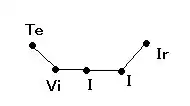
The Tevir is sung on a low tone, going downward at the beginning and upward at the end.
References
- ↑ A Hebrew grammar: containing a copious and systematic development of the ... By Samuel Ransom, page 207
- ↑ Chanting the Hebrew Bible By Joshua R. Jacobson, page 113
- 1 2 3 4 5 6 Concordance of the Hebrew accents in the Hebrew Bible: Concordance ..., Volume 1 By James D. Price, page 6
- 1 2 Concordance of the Hebrew accents in the Hebrew Bible: Concordance ..., Volume 1 By James D. Price, page 5
This article is issued from Wikipedia. The text is licensed under Creative Commons - Attribution - Sharealike. Additional terms may apply for the media files.